

News

News
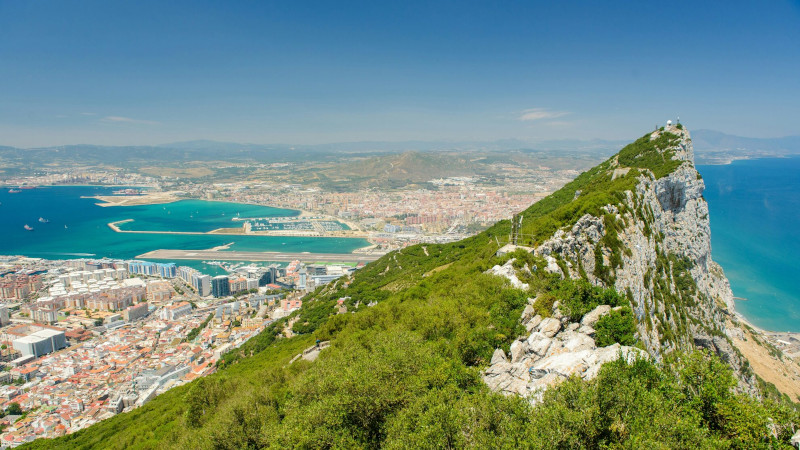
The research project Variation in English Worldwide (ViEW) and the research group it belongs to, Language Variation and Textual Categorization (LVTC) are pleased to announce that the 5th Gibraltar International Conference: Linguistic, Literary and Cultural Perspectives (GIC5) will take place on 15-16 April 2027 at the University of the Balearic Islands (Sa Riera Building, Palma de Mallorca).
The call for papers will open soon.
All information available at the conference website.
The LinguaSOUTH Chair (University of Salamanca) is pleased to invite you to the one-hour online seminar “Linguistic Diversity Under Threat: Global South and Global North Perspective,” which will take place on Friday, September 25 at 10:00 a.m. (UTC+1).
With the aim of continuing to foster academic synergies and dialogue between the Global South and the Global North, two experts from these different contexts will bring their perspectives together to examine the accelerated decline of minority languages—a process in which erosion is rarely a natural occurrence.
Representing the Global North perspective, Prof. Seoane (University of Vigo) will discuss the origins of Llanito in Gibraltar, its development, key turning points, and its current status and speaker community. The Global South perspective will be provided by Prof. Chebanne (University of Botswana), who will discuss the evolution of Khoisan languages in Botswana.
This forum invites students and academics to reflect on both the similarities and significant contrasts among endangered languages, offering an original perspective on the survival of very small minority languages in the world today.
Registration is free but compulsory. Complete the form and receive the Google Meet link the day before the seminar (Thursday 24 Sept).
A certificate of attendance will be sent to those who request it.
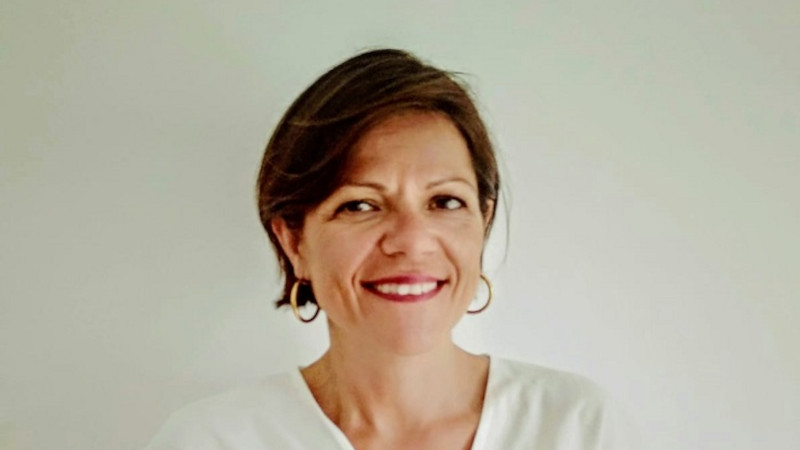
On 27 May Cristina Suárez-Gómez delivered a paper titled "Gibraltar English in transition: Language attitudes and identity in a World Englishes context" at the 47th edition of the ICAME conference, which focused on the "Confluence of Corpus Research in the Age of AI.
The conference was held at the University of Koblenz, 26-30 May. The programme and her abstract can be found here.
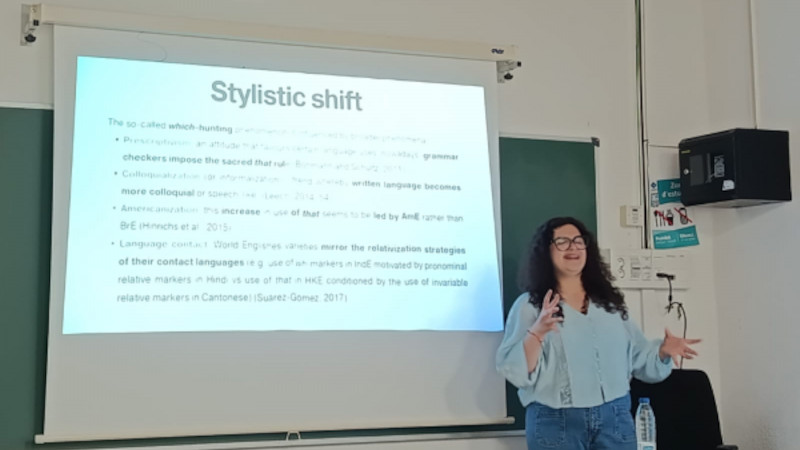
During the 11th Setmana del Postgrau (Postgraduate Week) held at the University of the Balearic Islands from 11 to 15 May, PhD candidates Vicky Rodríguez-Lázaro and Marina Pérez Martín presented their work on relativizers and the passive voice in Gibraltar English respectively, as part of the dissemination activities of their doctoral programme in English Philology and Philosophy.
We appreciate the valuable feedback received on their preliminary results.
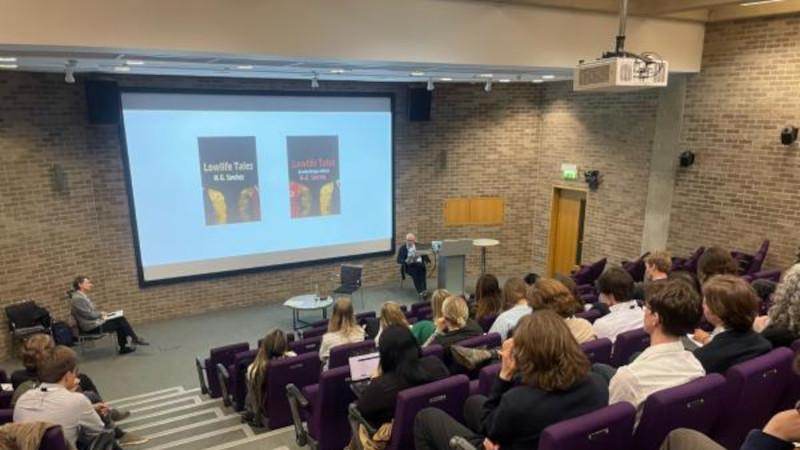
M. G. Sanchez recently delivered a lecture titled Language, Identity and Stories at University of Cambridge. The event, held at Clare College on 13 April, attracted an audience of more than 90 doctoral students from the University of Cambridge, University of Oxford and the Open University.
During the hour-long presentation, Dr Sanchez explored themes relating to Llanito, Gibraltarian identity and his literary work, with particular emphasis on Lowlife Tales, his most recent publication, which has recently appeared in both a standard English edition and a version incorporating Llanito dialogue.
Meanwhile, an essay titled Border Imagery in M. G. Sanchez’s Literary Cartography of Gibraltar has been published in Spatiality in Contemporary Anglophone Literatures, a new volume released by Routledge. The essay was written by Serbian scholar Tijana Parezanović.
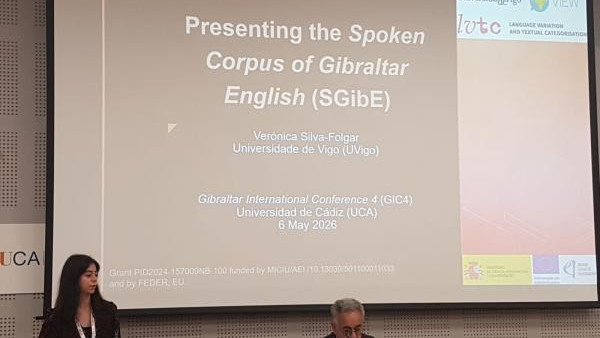
The 4th edition of the Gibraltar International Conference run successfully between 6 and 8 May 2026. The following ViEW members contributed a paper: Lucía Loureiro-Porto, Carmen Parafita Couto, Cristina Suárez-Gómez, Marina Pérez Martín and Victoria Rodríguez-Lázaro.
Elena Seoane was invited as a plenary speaker and discussed colonialingualism in gibraltar, which would provide an explanatory framework to understand the loss of multilingualism in Gibraltar and the intentional marginalization of internationally recognised Gibratarian authors. Other plenary speakers were Andrew Canessa, from the University of Essex, and Esterino Adami, from the University of Turin.
Previous editions of the conference took place at the Universities of Cambridge (2023), Vigo (2024) and Basel (2025).
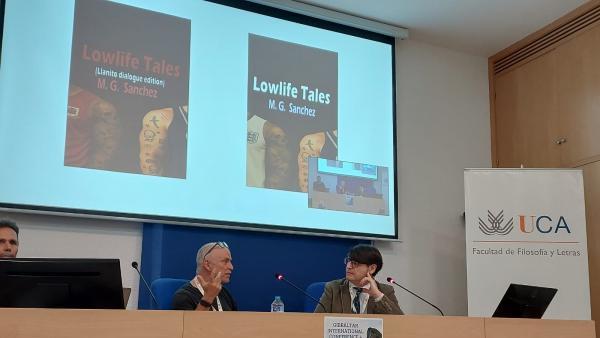
On 6th April M.G. Sanchez launched his latest book Lowlife Tales at the University of Cádiz, during the 4th Gibraltar International Conference (Cádiz, 6-8 May, 2026).
Featuring 11 stories and running to around 380 pages (360 pages for the English-only edition), Lowlife Tales tackles themes such as cultural identity, language loss, smuggling and crime, rising nationalism, life in the margins and other of the topics that have traditionally interested Sanchez as a writer.
All the stories included in the Llanito version appear in the English‑only edition, except for the story ‘Toni Metetrola’ which has been replaced by a new, specially written piece entitled ‘The Return of the Native.’
Explains the author: “ ‘Toni Metetrola’ relied so heavily on code‑switched dialogue that it proved impossible for it to be rendered into a monolingual English version, so I replaced it with ‘The Return of the Native’, a new story about a Gibraltarian who returns to the Rock after forty years abroad and is struck by how much everything has changed around him – from the lack of a British military presence to the fact that young people nowadays only speak in English….’
The stories to be found in both editions are:
Shot / Bobby in Babilonia / Cabrón x 2 / Patriotic Eric / Jimmy C. / Best of Both Worlds / Diestro Maestro / Paulie and the Pulpo / CJ Interruptus / In Paradisum
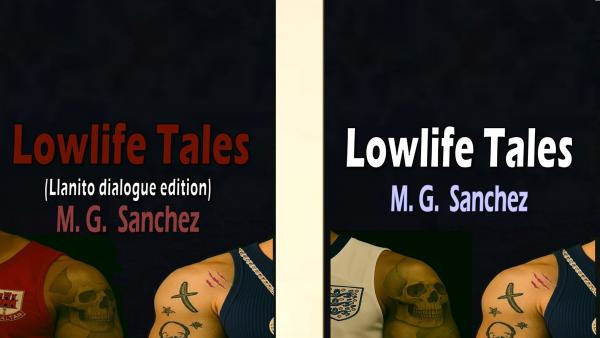
Gibraltarian writer and View affiliate member M. G. Sanchez’s latest book has now been published in both Llanito and English‑only editions. Lowlife Tales brings together eleven stories across nearly four hundred pages and looks at themes such as identity, nationalism, Gibraltar’s relationship with Spain, and language loss. ‘The Return of the Native,’ the final story in the English edition, specifically looks at language and can almost be read as an elegy for the Llanito that was spoken in Gibraltar in the 1980s and 1990s, but which is now rapidly fading from everyday use.
Speaking about the book View team leader Elena Seoane said: ‘Lowlife Tales is not just a compulsively readable and highly entertaining read; it also serves as an important linguistic resource, showing how Llanito was spoken through the 1980s and 1990 and reflecting thoughtfully on the dilemmas posed by language loss. I am sure this book will be an invaluable contribution for students of Llanito and Gibraltarian code-switching.’
The book can be viewed on the inkshere.
Congratulations, Mark. We are truly in awe of your talent!
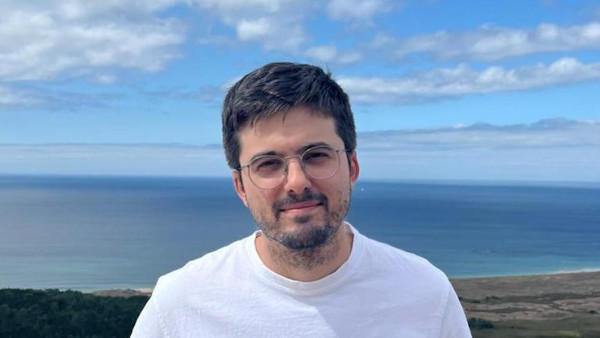
ViEW member Dr Pablo Vilas Santamaría has obtained a tenure-track position (Ayudante Doctor, Lecturer) at the University of the Balearic Islands.
Congratulations, Pablo!