

News

News
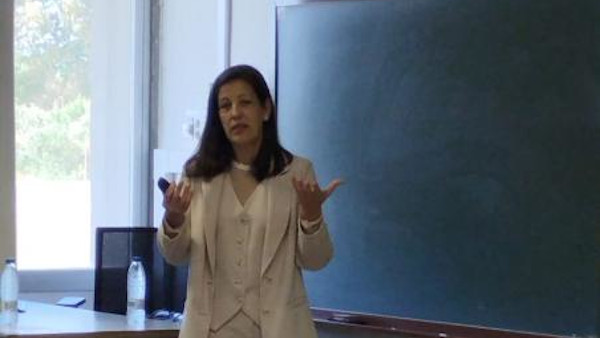
On 8th May, Cristina Suárez and Lucía Loureiro will host a new Symposium on English Linguistics: English Linguistics in the 21st Century, which will take place at the Facultat de Filosofia I Lletres of the University of the Balearic Islands.
The title of the Symposium makes reference to the novelty of the studies presented. The first guest speaker, Dr Paloma Núñez-Pertejo (University of Santiago de Compostela) will discuss her latest research on youth language in the London area and, crucially, she will compare it with current dis(similar) trends observed in Spanish youth language, as represented in COLA, the Corpus Oral de Lenguaje Adolescente. The second guest speaker, Heidi Douglas (University of Vigo) will tackle a still under-researched topic in Spain: the presence of English as a Lingua Franca (ELF) at Spanish universities. Her study of the attitudes of professors and students towards the teaching and learning of ELF, based on hundreds of questionnaires and interviews, intends to provide an answer to the question why ELF is hardly recognized in Spain whereas ELF-aware materials and classes are common in other European universities.
We are grateful to Paloma and Heidi for accepting our invitation to discuss their latest findings in our Symposium and look forward to it.
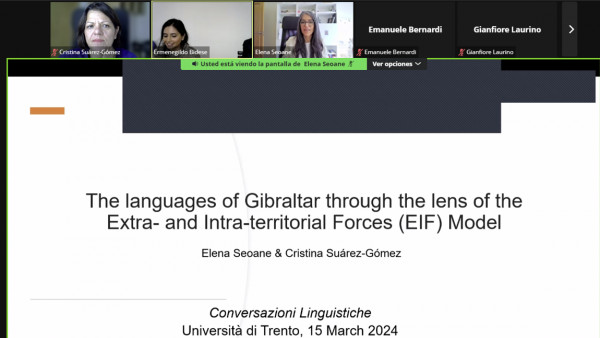
On 15 March Cristina Suárez and Elena Seoane will deliver an invited talk at the Università di Trento, with the title "The languages of Gibraltar through the lense of the Extra- and Intra-Territorial Forces (EIF) model". The talk is part of the Conversazioni linguistiche 2023/2024, details can be found here.
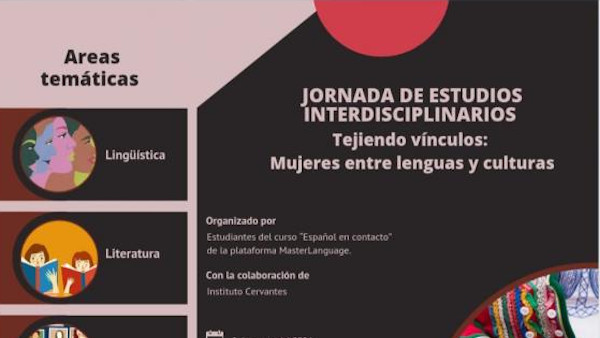
On 8th March the Instituto Cervantes in Utrecht will hold the Jornadas de Estudios Interdisciplinarios Tejiendo vínculos: Mujeres entre lenguas y culturas. Elena Seoane will participate in the linguistic thematic area with the talk "Tejiendo vínculos entre lengua y sociedad: El desarrollo sociohistórico de las lenguas de Gibraltar." She will discuss the sociohistorical factors that have shaped multilingualism in the recent history of Gibraltar and that have determined the current shift towards monolingualism in English in this British overseas territory.
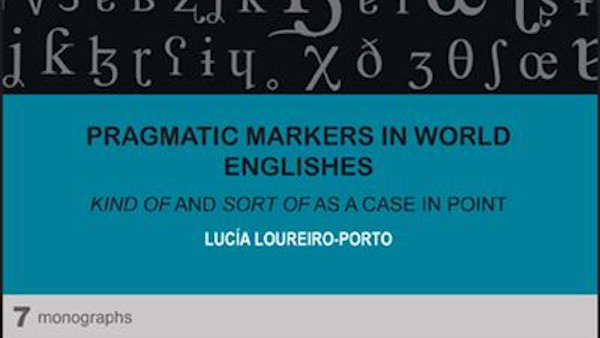
Lucía Loureiro-Porto's new book has just come out with the title Pragmatic Markers in World Englishes. Kind of and sort of as a case in point (Publicacions Universita València). This book contributes to the field of pragmatic variation in World Englishes by analysing the pragmatic markers ‘kind of’ and ‘sort of’. After a general review of their history and current use, the book offers a contrastive study of their frequency, semantics and pragmatic values in four varieties of English, as represented in the GloWbE corpus. These are, on the one hand, the two most influential inner circle varieties of English, those spoken in the United States and Great Britain, and, on the other, two outer circle varieties spoken in former colonies of these two countries, namely the Philippines and Singapore respectively. The results strengthen the understanding of the effects of global processes such as Americanization and glocalization on pragmatic variation and illustrate phenomena of linguistic convergence and divergence across space.
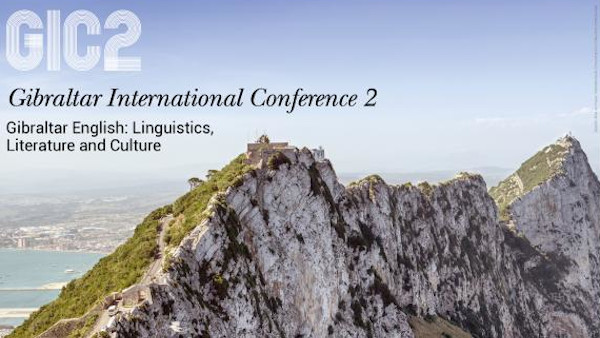
Our research project Variation in English Worldwide (ViEW) and the UVigo research group Language Variation and Textual Categorisation (LVTC) are pleased to announce the "2nd Gibraltar International Conference: Gibraltar English: Linguistic, Literary and Cultural Perspectives”, which will take place on 8-9 July 2024 at the MARCO Museum lecture theatre in Vigo. Confirmed plenary speakers are Prof Laura Wright, form the University of Cambridge, Gibraltarian writer Dr M.G. Sanchez and Prof Carmen Parafita-Couto, from the Universities of Leiden and Vigo. Please visit the website, the call for papers is open! gibraltarintconference2.webs.uvigo.gal
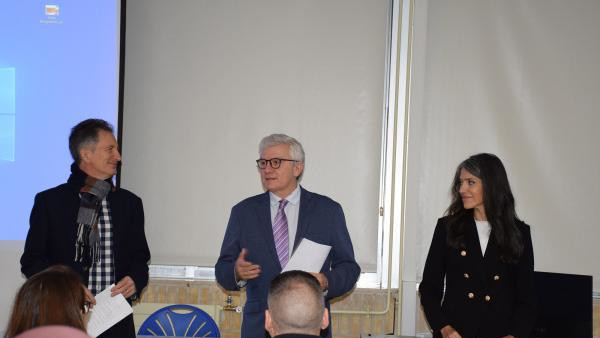
On 15th December, Prof Elena Seoane co-organised, together with Xandre Rodríguez, the First Xornada de Multilingüismo. Plenary speakers Montse Comesaña (University of Minho), Pedro Álvarez Mosquera (University of Salamanca), Rei Rodríguez (University of Santiago de Compostela and Instituto da Lingua Galega) and Xurxo Martínez (Servicio de Normalización Lingüística do Concello de Redondela) discussed multilingualism at a global and local scale from the perspective of psycholinguistics, sociolinguistics and linguistic policies. 37 students explosed their knowledge clips, which included interviews to multilingual speakers of Galicia, Spain, Europe, Africa and Asia. The news can be read here: https://www.uvigo.gal/universidade/comunicacion/duvi/filoloxia-traducion....
We are extremelly grateful to the plenary speakers and the students for the inspiring work!
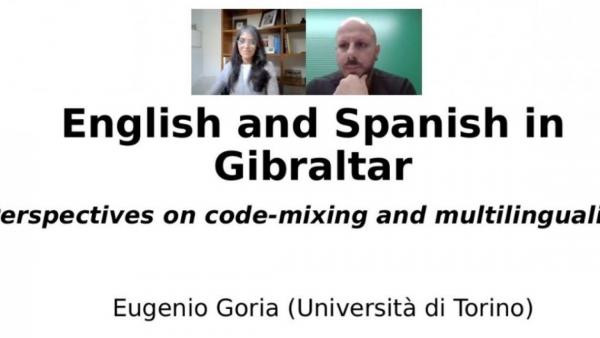
On 20 November Dr Eugenio Goria, from the University of Turin, gave a talk within the IDAES doctorate programme about The dynamics of bilingual discourse in Gibraltar. He discussed the relationship between code-switching, with pragmatic intention on the part of speakers, and code-mixing, a form of language use characterised by the presence of conventionalised forms from other languages that have lost their pragmatic meaning. A corpus-based apparent time study leads him to conclude that Gibraltar English in young speakers can be, in relaxed contexts of use, on the way to becoming a fused lect.
Thanks for accepting our invitation!
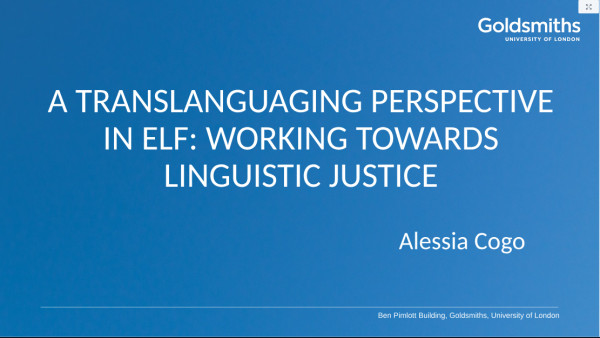
On 20 September Dr Alessia Cogo delivered a lecture entitled "A translanguaging Perspective in ELF: Working towards linguistic justice". She first explored the concept of “translanguaging” and then discussed how it can be relevant to ELF. She challenged the English monolingual policies and practices that dominate English, especially English language teaching, around the world today and showed how adopting a translanguaging perspective, even in English as a Foreign Language contexts, can not only provide the linguistic and cultural diversity approach towards today's language teaching, but can build foundations for action towards linguistic justice.
We would like to thank Dr Cogo for throwing light on a topic that is both fascinating and controversial.
Dr Cogo is a senior lecturer in applied linguistics and sociolinguistcs at Goldsmiths, University of London. She is also the director of the MA in Multilingualism, Linguistics and Education, editor-in-Chief of the ELT Journal, and the founder and co-convenor of the AILA Research Network on English as a Lingua Franca.
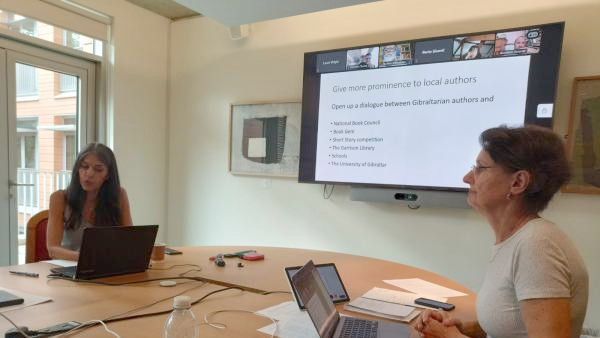
On 11-13 September, Professor Laura Wright held a Symposium on Gibraltar Literature and Culture. The most prominent Gibraltarian authors and various nternational academics discussed their literary work. The most prominent topic, however, was the steps that need to be taken to promote Gibraltar culture and the use of Llanito, and the steps to be taken going forward. Professors Wright and Seoane set the agenda for the next months, including, among others, the annual celebration of this symposium. This will take place at the University of Vigo in 2024 and at Basel University in 2025.
For more information on this symposium and its ramifications, please contact