

News

News
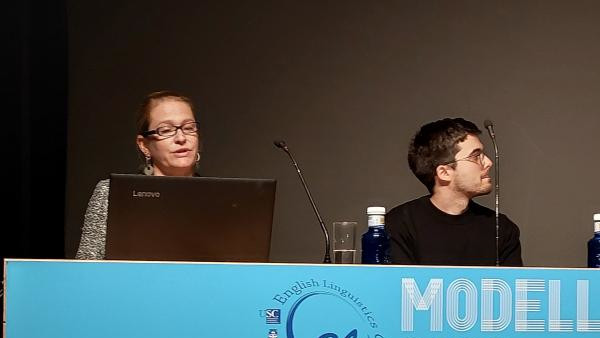
On 19-20 January 2023 we held the International Workshop Modelling the linguistic architecture of English: cognitive and empirical developments. One of the plenary speakers was our team member Professor Sarah Buschfeld, who gave a talk on "Modelling lesser known varieties and emergent contexts of World Englishes". Here she revised and questioned the validity of her latest model, the External-Internal Forces Model, and suggested expanding it to accommodate new developments taking place specially in lesser-known varieties of English, like that of St Marteen island.
It was a pleasure having Sarah at UVigo!
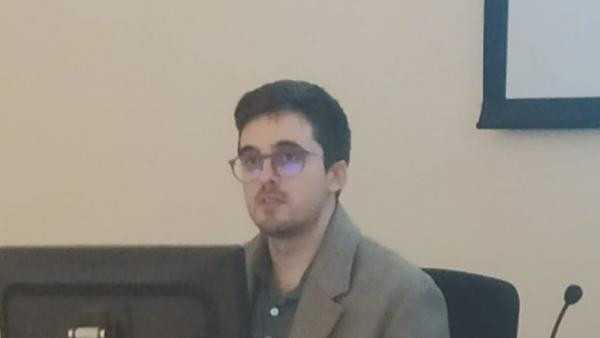
Pablo Vilas Santamaría has won the Catalina Montes Award to the best paper by a graduate speaker at the 45th International Conference AEDEAN held at the University of Extremadura in Cáceres on 15-18 November 2022. His paper, ""Decision-making in the Face of Fuzzy Boundaries: a Preliminary Discussion", offered a detailed analysis of various theoretical aspects of his ongoing PhD research.
Congratulations, Pablo!!
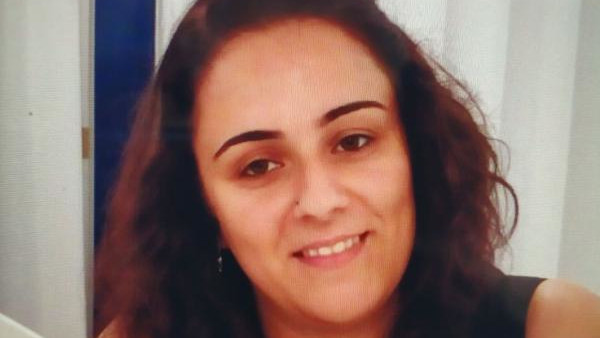
Last September, our group member Raquel Romasanta obtained a junior lectureship (Ayudante Doctora) at the University of the Balearic Islands. This is a full time tenure-track position for five years.
Congratulations, Raquel!
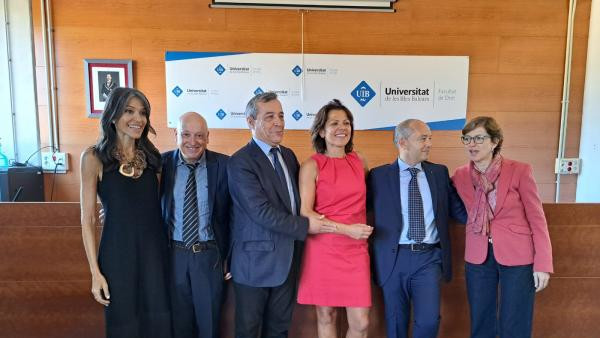
On Friday 14, Cristina Suárez-Gómez became Full Professor of English Linguistics at the University of the Balearic Islands after a full-morning examination with the following board members: Professors Alberto Lázaro (University of Alcalá de Henares), María Juan and Pedro Guijarro (University of the Balearic Islands), Ignacio Palacios (University of Santiago de Compostela) and Elena Seoane (University of Vigo).
Congratulations, Cristina!
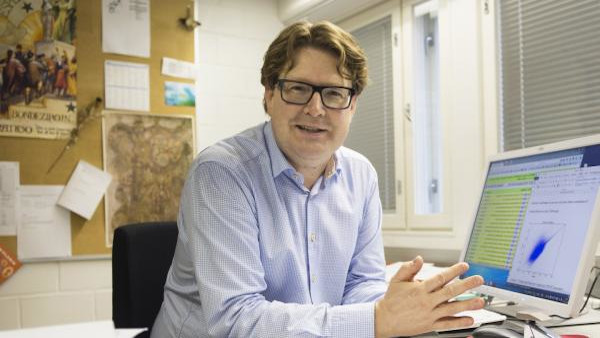
Prof. Mikko Laitinen, from the University of Eastern Finland, will deliver a guest lecture entitled Networks of Americanization on Friday 21 October at 12:30pm.
Here follow the connection details and abstract. See you there!
Link: campusremotouvigo.gal/access/public/meeting/563550549
Password: N1Office
Abstract
This presentation focuses on language use in social media and investigates variability of second language use of English in the Nordic region. English accounts for around 30–40 % of all social media data in the region, making it a unique and previously uncharted setting to study variability (Laitinen & Lundberg 2020). The empirical part asks if language users systematically select British English forms or resort to variants found in American English. Of interest is, therefore, the process of Americanization, viz. the gradual change of how English around the world tends to follow contemporary American English norms (Leech et al. 2009: 252–259). Gonçalves et al. observe that American English variants dominate the expanding circle settings, but point out that “in countries where English is not the mother tongue the real problem is the lack of data” (2018: 8).
I amend this bad data problem by using a more detailed data set, and my empirical material consists of one year of tweets in English and their metadata from the Nordic Tweet Stream (NTS) corpus. This real-time monitor corpus currently contains material from nearly 700,000 user accounts.
The empirical part focuses on a set of spelling (e.g. British centre vs. American center) and lexico-grammatical variables (e.g. singular or plural agreement with collective nouns). It not only utilizes geotagging properties of Twitter data but amends them with interaction parameters that enable me to look into social settings in which people use language.
Overall, this presentation suggests methodological improvements for studying second language uses of English through social media.
References:
Gonçalves, Bruno, Lucía Loureiro-Porto, José Ramasco, David Sánchez. 2018. Mapping the Americanization of English in space and time. PLoS ONE 13(5): e0197741.
Laitinen, Mikko & Jonas Lundberg. 2020d. ELF, language change and social networks: Evidence from real-time social media data. In Anna Mauranen & Svetlana Vetchinnikova (eds.), Language Change: The Impact of English as a Lingua Franca, 179–204. Cambridge: Cambridge University Press.
Leech, Geoffrey, Marianne Hundt, Christian Mair & Nicholas Smith. 2009. Change in Contemporary English: A Grammatical Study. Cambridge: Cambridge University Press.
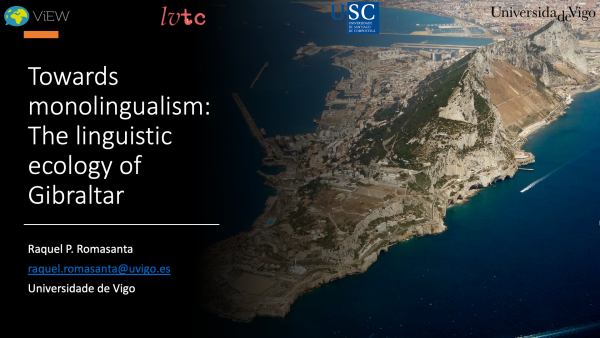
Last week, Raquel P. Romasanta gave an invited talk at the Pompeu Fabra University in Barcelona, with the title "Towards Monolingualism: The Linguistic Ecology of Gibraltar". Staff and students drew parallels between the sociolinguistic situation in Gibraltar and in Catalonia, and were intrigues about the potential creole status of Yanito, one of the vernacular languages.
All feedback was exciting and very welcome!
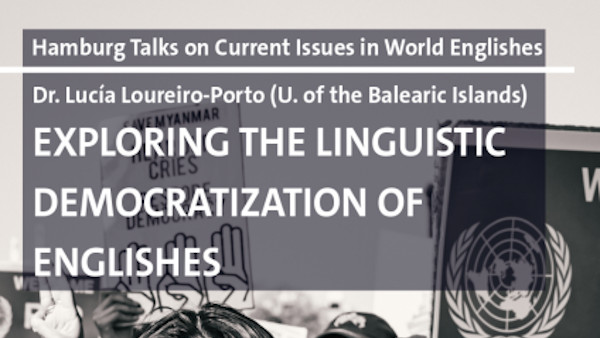
Next Tuesday 31 May at 14:15, Lucía Loureiro-Porto will give a presentation at the webinar Hamburg Talks on Current Issues in World Englishes, organised by Robert Fuchs at the University of Hamburg. Her talk is called "Exploring the Linguistic Democratization of World Englishes" and you can register for free to attend at:
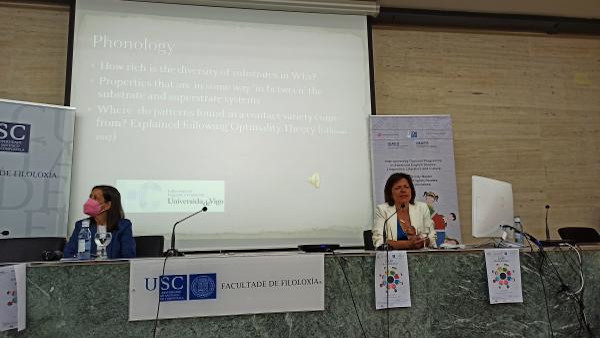
Our colleague Cristina Suárez-Gómez, from the University of the Balearic Islands, was invited to be a plenary speaker at the Graduate Day of IDAES, the Inter-disciplinary PhD program in Advanced English Studies, held on 19-20 May at the University of Santiago de Compostela. Her talk addressed the more relevant aspects of research on World Englishes, and had the title: "Doing research on World Englishes: theoretical and methodological considerations”.
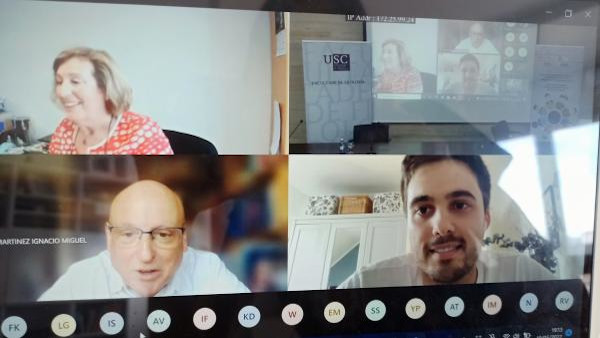
On 18 May, PhD candidate Pablo Vilas presented his work at the IDAES Graduate Day (Inter-University PhD Programme on Advanced English Studies).
His presentation, “Methodological obstacles and the steps that follow: comment clauses and the meaning of ADMIT”, received useful feedback, for which we are very grateful.