

News

News
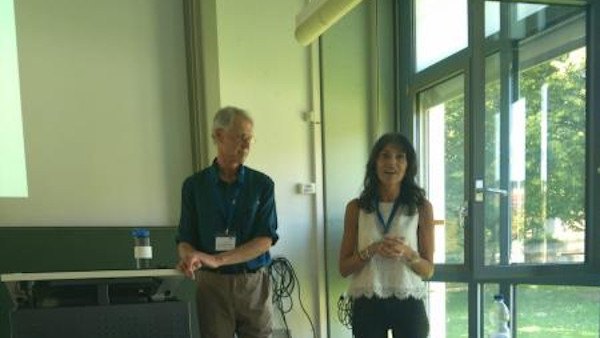
On 1st June, Elena Seoane and Douglas Biber convened the workshop Register Approaches to Language Variation and Change in English(es) within the ICAME 40 conference held in Neuchâtel, Switzerland, from 1 to 6 June. Ten different papers covered a fairly wide range of topics within register variation, with a focus on particular registers (papers by Edward Finegan & Benjamin Lee; Stefania Degaetano-Ortlieb), earlier English (papers by Claudia Lange; Paula Rodríguez-Puente), learner English (Tove Larsson & Magali Paquot), student writing (Randi Reppen), World Englishes (Stella Neumann & Stefan Evert), specific syntactic markers of register (Javier Perez-Guerra) and on new approaches (papers by Alexandra Engel, Benedikt Szmrecsanyi, Freek Van de Velde & Jason Grafmiller; Doug Biber, Jesse Egbert & Daniel Keller). We are grateful to all participants and attendants for their work and active contribution to the fruitful debate that followed, and to the ICAME 40 organisers for a wonderful conference.
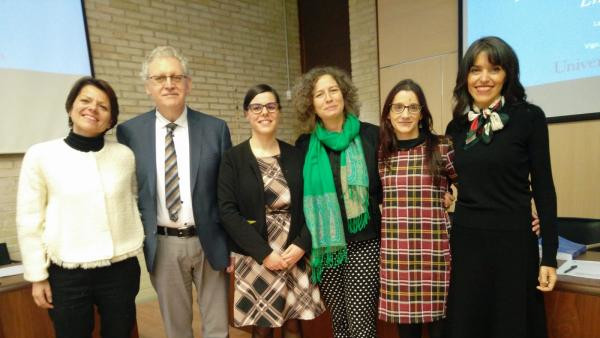
Congratulations to Dr. Laura García-Castro, who, on 10 December 2018, successfully defended her PhD entitled The complementation profile of REMEMBER in Post-colonial Englishes [International doctorate]. Laura graduated in 2014 at the University of Vigo, defended her MA on Secondary Education in 2015 and has since been a member of the ViEW project within the LVTC team. In the incoming days she will become a postdoctoral fellow at Vigo, on a competitive one-year grant funded by the State Research Agency ('Agencia Estatal de Investigación') and the European Social Fund.
Examiners: Hubert Cuyckens (University of Leuven), Lucía Loureiro-Porto (University of the Balearic Islands) and Nuria Yáñez-Bouza (University of Vigo).
Supervisors: Elena Seoane (University of Vigo) and Cristina Suárez-Gómez (University of the Balearic Islands).
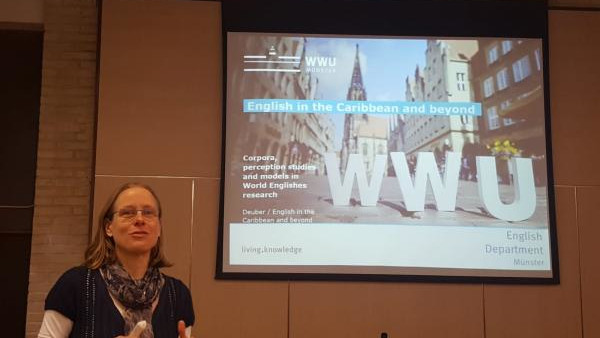
On 20 November Professor Dagmar Deuber, from the University of Münster (Germany), gave a four-hour seminar entitled English in the Caribbean and beyond: Corpora, perception studies and models in World Englishes research. Attended by under and postgraduate students as well as researcher and Department staff, this seminar drew on current research on English in the Caribbean – specifically, the island of Trinidad – that is being conducted at the Chair of Variation Linguistics at the University of Münster to illustrate and discuss a number of general aspects that are of current relevance in the field of World Englishes research, both at a methodological and a theoretical level.
The seminar covered a wide range of perspectives, including synchronic and diachronic variation as well as various linguistic levels ranging from grammar to accent. Methodologically it illustrated the benefits of extending the currently available range of corpora for New Englishes and showed how corpus and perception studies can be fruitfully combined. On a theoretical level, Prof. Deuber discussed implications for current thinking concerning language and globalization as well as for current models of World Englishes; furthermore, she introduced the notion of translocality as an integrative concept for cross-boundary sociolinguistic phenomena as are becoming increasingly common in today’s world. The seminar was structured into three main parts: (i) A diachronic study of the language of the language of the Trinidad & Tobago Guardian (ii) The “globalization of vernacular variation” meets Creole: quotative be like in Trinidad and (iii) Standard English in Trinidad, multinormativity, and translocality: Implications for the Dynamic Model and the Extra- and Intra-Territorial Forces Model. This seminar was funded by the Departament of Filoloxía Inglesa, Francesa e Alemá, the research group LVTC (Ref. ED431C 2017/50), and the research Project ViEW (Ref. FFI2014-53930-P).
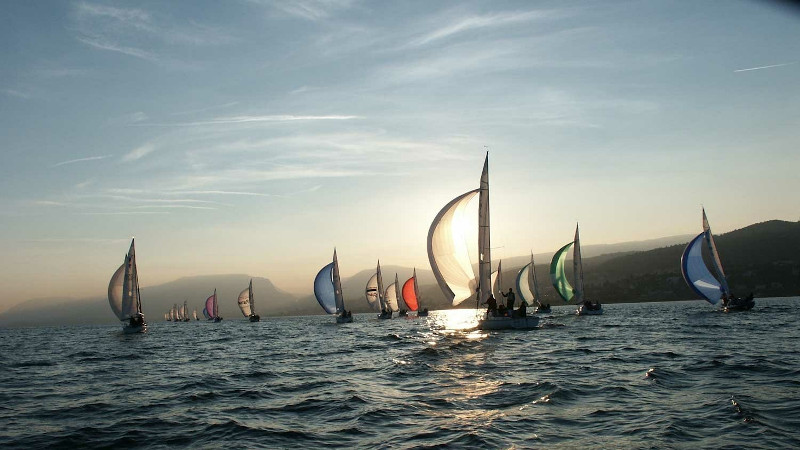
Pre-conference workshop at ICAME 40, Neuchâtel, Switzerland (1-5 June 2019)
Register approaches to language variation and change in English(es)
Conveners: Elena Seoane (University of Vigo, Spain) and Douglas Biber (Northern Arizona University, US)
Registers, defined by Neumann (2013: 16) as “types of instantiated texts reflecting a similar situation”, are shaped by their situational context, communicative purpose, social function and intended audience. As such, they encapsulate what Bybee and Hopper call “the pressure of discourse” (2001: 3), which itself serves to determine the structure of grammar. Whereas the existence of register differences has always been an underlying assumption in work on language variation and change, a number of recent studies have shown how register is an essential predictor of language change (among others, Biber 2012, Biber and Egbert 2016, Biber and Gray 2013, 2016); as a consequence, they have highlighted the importance of controlling for register variation in the analysis of synchronic and diachronic variation, in that it is a potentially distorting factor (Mair 2015: 126; Hilpert and Mair 2015: 181). This has been demonstrated empirically in various studies that identify register-dependent variability as a “confounding factor” (Mair 2015: 141) that needs to be included in any multivariate analysis of variation (e.g. Szmrecsanyi and Hinrichs 2008 on genitive variation in CSAE, FRED the Brown family of corpora, and Mair 2015 on modality in the latter).
Variationist studies such as these, which use register as a predictor variable, differ from – and are complemented by – text-linguistic studies, in which the primary goal is to describe the registers themselves by providing quantitative analyses of their linguistic features, including patterns of register variation (cf. Biber 2012: 12-17; Biber and Gray 2013: 122; Biber et al. 2016). Text-linguistic studies shed light on two crucial questions about grammatical change, especially change in the recent history of English, which is more quantitative in nature: when and where (in what particular register(s)) did it take place?
Against this background, the workshop aims to bring together researchers who use electronic corpora to explore grammatical variation and change across the English-speaking world by adopting a variationist design to examine register-dependent variability, and/or a text-linguistic design, as a means of enhancing our knowledge of registers and their role in language change.
We welcome contributions that:
- Examine the role of register in the diachronic evolution of linguistic phenomena
- Explore synchronic register differences in one or more varieties of English
- Compare register variability across different varieties of English
- Describe the functionally motivated distinctive discourse conventions of particular registers
- Challenge stereotypes about particular registers, both offline traditional registers and “new” online registers (e.g. blogs, tweets, Internet forums)
- Question the spoken vs written dichotomy as a predictor of variation in favor of register-dependent developments
- Address quantitative and qualitative methodological issues regarding the study of register variation across different varieties and across different periods of time
- Discuss optimal corpus design for register studies and review the suitability of current corpora for register research
- Approach language acquisition, learning, teaching and description from a register perspective
Abstracts should be 500 words max. (including references) and submitted via www.icame40.ch/login. Deadline: December 15, 2018.
Please contact us if you have any questions at
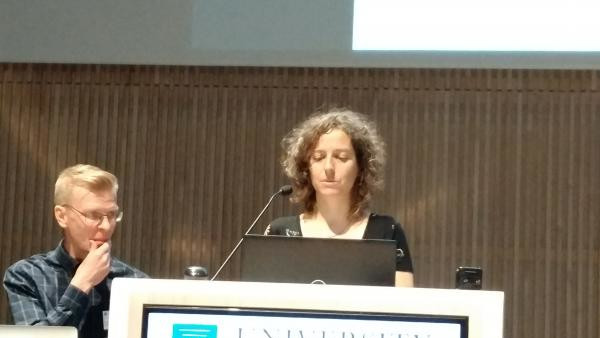
Lucía Loureiro-Porto, together with Turo Hiltunen (University of Helsinki) held a workshop entitled Democratization in English(es): Synchronic and diachronic perspectives at ICAME 39, Tampere, 30 May-3 June. The success of the workshop was the thematic coherence and quality of the papers given by Minna Palander-Collin, Minna Nevala, Turo Hiltunen, Jenni Riihimäki, Jukka Tyrkkö, Laura Paterson, Lucía Loureiro-Porto, Elena Seoane, Susanne Wagner, Svenja Kranich, Elizabeth Hampel, Hanna Bruns and Nick Smith. The description of the workshop can be found here.
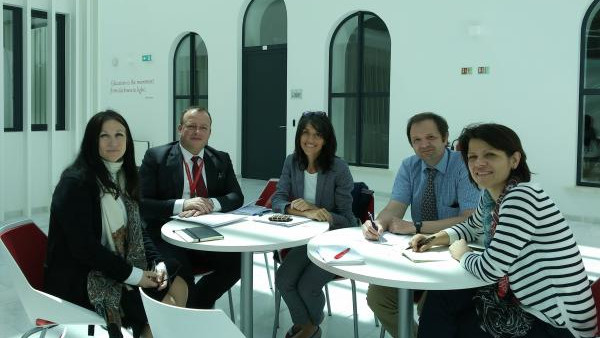
From 18 to 21 April, Cristina Suárez, Gerold Schneider (affiliated member of our project) and Elena Seoane visited Gibraltar with the aim of compiling material for the written component of ICE-GBR. We worked intensively with Dr Jennifer Ballantine, also an affiliated member of our project, who provided us with relevant texts from official reports (administrative writing) and magazines (popular writing) at the Garrison Library. She also introduced us to Dr Geraldine Finlayson, Deputy Head of Heritage, as well as Director of the Institute for Gibraltarian Studies and Chief Laboratory Scientist of the Gibraltar Museum, who helped us with administrative and academic writings, and Charlene Figueras, the Director of the Youth Center, who does incredibly constructive and creative work with the Gibraltarian youth. We also visited The University of Gibraltar and met Dr Darren Fa, the Director of Research and Partnerships at the University of Gibraltar of the University, and his assistant, Karissa Pizzarello, who were extremely helpful with student writings.
We are very grateful to all of them for their time and interest in the project. The Gibraltarian sociolinguistic context is fascinating, complex, extremely attractive and rapidly changing. One thing does not change, though, and that is the generosity of Gibraltarian people and their deep interest in their culture and language.

On December 26th it was announced that our research project "A register aprroach to morphosyntactic variation in World Englishes and compilation of resources for its study (The International Corpus of English - Gibraltar)," Re-ViEW, has received three-year funding from the National Programme for Excellence in Scientific and Technical Research (Spanish Ministry of Economy and Competitiveness, grant FFI2017-82162-P), €60.500 plus one four-year PhD research position. This research project will be carried out in collaboration with Douglas Biber (Northern Arizona University), Marianne Hundt, Gerold Schneider (University of Zurich) and Jennifer Ballantine (University of Gibraltar).
Lucía Loureiro-Porto and Turo Hiltunen, from the University of Helsinki, will hold the Workshop entitled Democratization in English(es): Synchronic and Diachronic Perspectives during the 39th International Conference of ICAME, to be held in Tampere, Finland, from May 30 to June2 2018. The call for papers is open until 15 December.
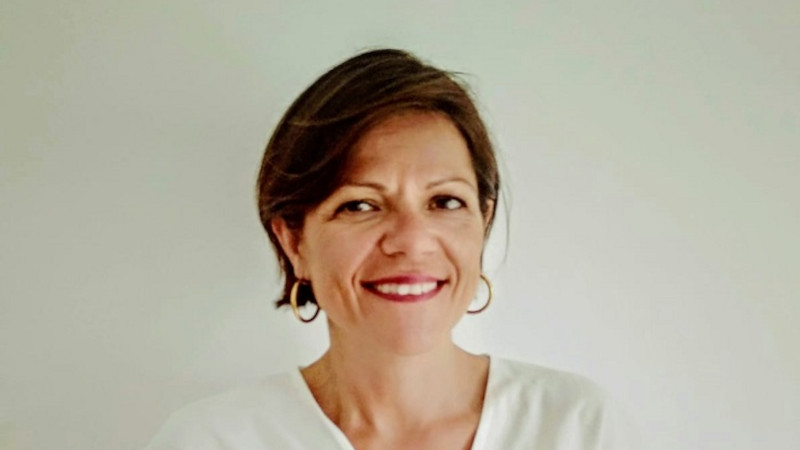
On 25 October, Cristina Suárez-Gómez delivered a lecture entitled Language contact and grammatical complexity in the structural nativization of relative clauses in Asian Englishes. She was invited by Dr Sara Pons-Sanz, Senior Lecturer at the School of English, Communication and Philosophy of the University of Cardiff. In her lecture she examined morphosyntactic variation in World Englishes. Drawing on spoken data from the International Corpus of English, she explored structural nativization in relative clauses in three varieties of English (India, Hong Kong and Singapore Englishes), which emerged as the consequence of British colonization, developed as varieties through educational systems, and are now consolidating as independent, linguistically different (local) prestige varieties. In addition to the varieties mentioned above, data from British English were included for comparison. The analysis showed that certain features and structures predominate in specific varieties, and also illustrated constructions which are specific to the Asian varieties under investigation. Finally, the presentation elucidated the potential factors determining the nativized structures, which can be explained as cross-linguistic tendencies that go beyond the influence of the local language(s), and hence they were further analyzed in light of cognitive determinants of learning, which favour isomorphism and thus aim at maximizing transparency.