

News

News
We are pleased to announce that the Tampere-Helsinki research consortium Democratization, Mediatization and Language Practices in Britain, 1700–1950 has received four-year funding from the Academy of Finland (560,000 EUR). The team members are Paivi Pahta (PI), Minna Palander-Collin, Minna Nevala, Arja Nurmi, Jukka Tyrkkö and Turo Hiltunen. Elena Seoane is proud to be one of the International Partners of the project, together with Anita Auer (Lausanne), Birte Boss (Duisburg-Essen), Erik Smitterberg (Uppsala) and Laura Wright (Cambridge).
DEMLANG produces knowledge about the interrelatedness of the sociocultural processes of democratization and mediatization, and language practices in Britain, 1700–1950. The aim is to discover mechanisms operating in the bidirectional relationship between sociocultural change and language change. This relationship will be empirically studied in public and Private texts mediating ideologies and values. The contribution of ViEW and is members will focus on 20th century processes of democratization in inner and outer circle varieties of English. Macrolevel analyses with large corpora allow data-driven tracing of changing patterns in lexis, phraseology and syntax and the discovery of statistically significant turning points, while microlevel analyses with philologically well-argued smaller corpora make it possible to uncover the complexity of phenomena and to explain emerging, changing and declining linguistic features with the help of historical background data. The consortium provides the critical mass and complementary areas of expertise required for achieving the theoretically and methodologically challenging aims.
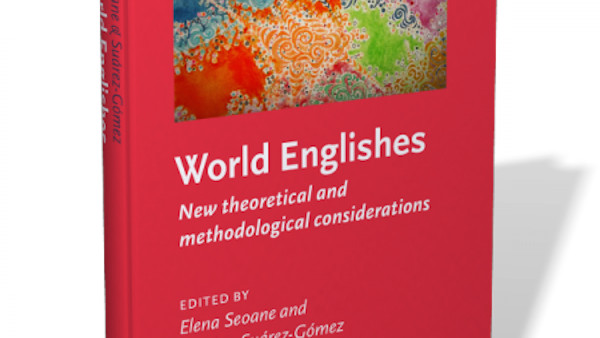
We are pleased to announced that our new book is now available: World Englishes: New theoretical and methodological considerations , issue 57 of the John Benjamins series Varieties of English around the World [VEAW g57], edited by Elena Seoane & Cristina Suárez-Gómez. The contributors to the volume are Julia Davydova; Stephanie Hackert; Marianne Hundt; Mikko Laitinen & Magnus Levin; Lucia Loureiro-Porto; Christian Mair; Ignacio Palacios-Martínez; Edgar Schneider; Elena Seoane; Valentin Werner; Lena Zipp & Adina Staicov, to whom we are deeply grateful. The book provides a collection of articles that reflect the current state of affairs in the blossoming field of World Englishes by bringing together several innovative synchronic and diachronic approaches. It contributes to the ongoing theoretical discussion concerning the criteria that make a low-frequency item represent an incipient change and examines the suitability of the sociolinguistics of globalisation theory for the study of non-traditional avenues for the spread of vernacular varieties of English (recent migrations, the entertainment industry, the web). It explores crucial aspects of language change and dialect evolution through the study of grammatical phenomena and the particular linguistic and socio-historical factors conditioning them. Together with theoretical questions, the volume shows a concern for methodological issues, such as sociolinguistic interviews, map-task experiments, metalinguistic comments, acceptability judgments and corpus-based methods. This volume represents the latest trends in the field and will undoubtedly set the agenda for the years ahead.
On February 29 and March 1, Professor Ulrike Gut, from the University of Münster, gave an eight hour seminar on “Grammatical variation across varieties of English and the compilation of corpora for their study”. After a brief introduction to the study of world-wide varieties of English – including a short overview of past and current research methods and the central research questions of the field – the seminar started by reporting on two studies concerned with use of the progressive in Nigerian English, which showed that the progressive is used in Nigerian English in a systematically different way from British English, both in terms of stylistic variation and the type of verbs that appear in the progressive (Gut & Fuchs 2013). The two studies furthermore try to give answers to the difficult question of when a grammatical feature that can be observed in a postcolonial variety of English can be considered a learner error, substrate influence or an innovation and the methodological question of how well cross-sectional data is suited for the study of ongoing language change in postcolonial varieties of English. In a different session, Professor Gut presented two other studies (Gut & Coronel 2012 and Fuchs & Gut in press) investigating causes of grammatical variation across varieties of English. Fristly, she showed that the English speakers’ norm-orientation in postcolonial countries can explain variation in the use of relative markers across Nigerian, Jamaican, Singapore and Philippine English. Secondly, she argued that a combination of register differences, especially the degree of formality, and cross-varietal preferences, explain the differences observed in intensifier use in Indian, Singapore, Philippine and British English. Another session was devoted to presentation and discussion of the corpus-based method of studying varieties of English. After an introduction to the aims and fundamental parameters of corpus linguistics, the compilation of ICE Scotland that is currently underway at the University of Münster is described in detail. ICE Scotland was presented as belonging to the ‘new generation’ of ICE corpora that is characterised by the data format XML, text-to-tone alignment of the transcriptions of the spoken part, the integration of metadata as well as an agile corpus compilation process (Voormann & Gut 2008). In a final session Professor Gut kindly addressed the questions of the professors, Postdoctoral and PhD students in the audience. Her seminar is available online, click here.
It was a pleasure having Ulrike at the University of Vigo; we hope to see her again soon!
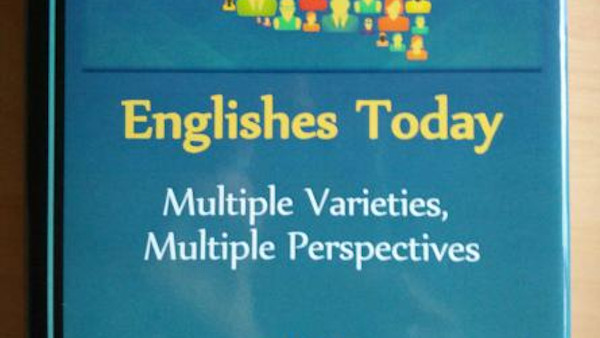
We are glad to announce the publication of the volume Englishes Today: Multiple Varieties, Multiple Perspectives (http://www.cambridgescholars.com/englishes-today).
This volume is the result of a selection of thematically-focussed presentations on the spread of English, delivered at the international conference Englishes Today: Theoretical and Methodological Issues, held on October 18-19, 2013, in Vigo. It is a response to the recent emergence of English as “the world’s first truly global language” (Crystal 2004, 4), currently spoken by nearly a third of the world population. The idea of English as a transnational language has motivated new fields of research with a primary focus on the English language in this context, which form the thematic backbone of the present volume. From a methodological perspective, the study of Englishes poses a number of challenges, and attempts have been made to address these in corpus linguistics, sociolinguistic fieldwork and variationist studies. As such, this volume contributes to this increasingly fashionable, but still somewhat under-explored field of research by drawing together ideas from different frameworks and approaches dealing with English today.
The different chapters reflect current trends in English linguistics research, and can be characterized broadly in terms of the study of the different diatopic and diastratic varieties of English, and the adoption of various theoretical and methodological perspectives. The chapters deal with the globalisation of English in itself and with the origin, development and status of varieties of English, often seen as a testing ground for different research traditions, including typological linguistics, second language acquisition, contact linguistics and sociolinguistics.
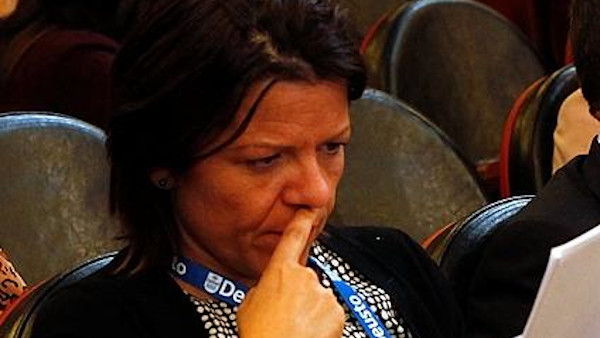
On 3 December Cristina Suárez-Gómez (University of the Balearic Islands) gave a talk at the Faculty of Philology and Translation entitled “Structural creativity in multilingual countries." In her presentation she examined structural creativity in World Englishes, i.e. varieties of English which have emerged in multilingual countries. Basing the analysis on data from the International Corpus of English (http://ice-corpora.net/), she explored relative clauses in the spoken language of the Englishes spoken in Hong-Kong, India and Singapore. She offered an analysis of a set of structures which diverge from the norm (e.g. deletion of stranded prepositions, as in “The one that I am very interested is the one at do you pronounce as Bifort” <ICE-SIN S1A-043>) and examined the potential factors operating in the creation of such structures: essentially, whether they are shaped by transfer from the local languages, or whether they are the result of the development of the contact varieties as L2s.
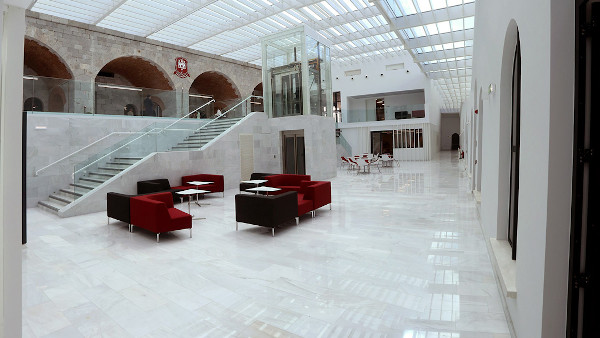
We are happy to announce that on 21st September 2015 the University of Gibraltar will open its doors and enrol its first cohort of students. This new higher education institution will bring many new opportunities for Gibraltar and the communities it will serve. For our project in particular, the compilation of the Gibraltar component of the International Corpus of English (ICE), it is going to become an invaluable source of linguistic data, since it will give us access to diverse text types, such as student essays, exam scripts, academic writing, popular writing on the different sciences and non-broadcast talks in Gibraltar English. Professor Daniella Tilbury, Vice-Chancellor of the University, informs that “[o]ur students will be taught by local educators who understand our context and needs, as well as by highly experienced academics drawn from different universities across the world.” This ensures that Gibraltar (academic) English will be the language used in the premises.
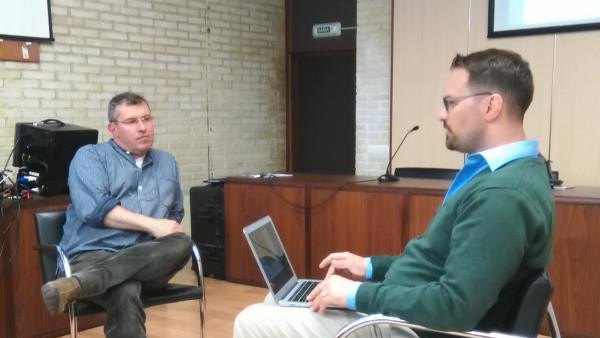
On 11 and 12 May 2015 Professors Alexander Bergs, from the University of Osnabrück, and Thomas Hoffmann (Catholic University of Eichstätt-Ingolstadt) gave a 12-hour seminar on Language Variation and Change in Construction Grammar at the Univesity of Vigo.
Prof. Hoffmann illustrated with great detail how Construction Grammar accounts for language variation and change in present-day English in combination with other domain-general cognitive principles such as end-weight, animacy and information structure. He applied Construction Theory to variation in present-day English, paying special attention to world-wide varieties of English derived from contact-language situations, such as pidgins, creoles, and L2 varieties of English. Prof. Thomas explained the different types of language contact scenarios and profiled the role of constructions in Schneider’s (2003, 2007) Dynamic Model of the evolution of Englishes.
Seminar avalable at http://tv.uvigo.es/serial/index?id=2363
At a recent meeting, the Press Syndicate of Cambridge University Press formally confirmed the appointment of our colleague Elena Seoane as Review Editor of the journal English Language and Linguistics (ELL), for a four-year term. She succeeds Bas Aarts, Professor of English Linguistics at University College London and Review Editor of ELL for the past four years.
English Language and Linguistics, the official journal of the International Society for the Linguistics of English (ISLE), is the top journal in the field of English linguistics. It has an impact factor of 0.54 (Q1) in SCImago (SCOPUS) Journal Rank and 0.7 (Q2) in Thomson Reuters’ JCR for Linguistics.

On April 15th it was announced that our research project Morphosyntactic variation in World Englishes and compilation of resources for its study (the Gibraltar component of the International Corpus of English) has received funding from the National Programme for Excellence in Scientific and Technical Research (Spanish Ministry of Economy and Competitiveness, grant FFI2014-53930-P). We have also obtained a one four-year PhD research position.
This project involves international cooperation with Jennifer Ballantine (Garrison Library, Gibraltar), Marianne Hundt (Univ. of Zurich) and Gerold Schneider (Univ. of Konstanz). PI: Elena Seoane